Our heartbreaking journey has inspired me to get involved in the BC Schizophrenia Society Foundation.
Guelda and “Team Heimburger” continue to set the pace for all of us in our Scotia Run.Steve’s grit and determination on his Walk For Hope were also inspiring because he raised not only funds, but also awareness about schizophrenia by talking with everyone he met.
Guelda’s story shows what can happen when family members learn about schizophrenia and get the right tools to support their loved one.[Read Guelda's story here.]In my family, we did not know very much about schizophrenia, even after Dave finally received his diagnosis.At that time, there was no organization like BCSS to give families resources and support.
Educating and supporting a family can change everything!
Because of what they learned, Guelda and her family understand that schizophrenia is a brain disease and is not anyone’s fault.Because of what they learned, Guelda and her family do not see schizophrenia any differently than they would diabetes or any other disease.
They talk openly with one another and with Kai, and work together to ensure that all members of their family thrive.They keep an eye on the latest research, attend conferences, and are always working and learning together.
And BCSS is key.Through the generosity of donors, BCSS offers vital support, education, and resources – free of charge – to anyone affected by severe mental illness like schizophrenia, so that they are better able to advocate and care for their loved ones.
And because of the pandemic, this mission has never been more important than it is right now. Those with mental illness are severely affected by the challenges and upheaval in society caused by COVID-19. With the increase in cases, Regional Educators are not just receiving calls from more families in distress, but these calls are far more desperate and urgent than ever before. Although support groups and programs like Strengthening Families Together (SFT) have been adapted to accommodate today’s environment, additional resources and services need to be developed quickly. At the same time, the number of children and youth who need the new online versions of the Kids and Teens in Control Programs continues to climb.
And then there is research.Understandably, COVID-related projects have become a priority in the world of research.But schizophrenia research for better treatments and care needs to continue so that perhaps our grandchildren and great-grandchildren will be safe from this devastating disease.
Every gift matters. By giving to BCSS, you are helping families today and funding research that will build a healthier, better tomorrow. Together, we can save lives.
Together, we can ensure families continue to have “a reason to hope…the means to cope.”
Please consider making your gift today and I will personally match all donations, up to a total of $10,000.This means you can double your gift… $50 becomes $100; $100 becomes $200.And to inspire you even more, I am extending my matching gift commitment to January 31, 2021.
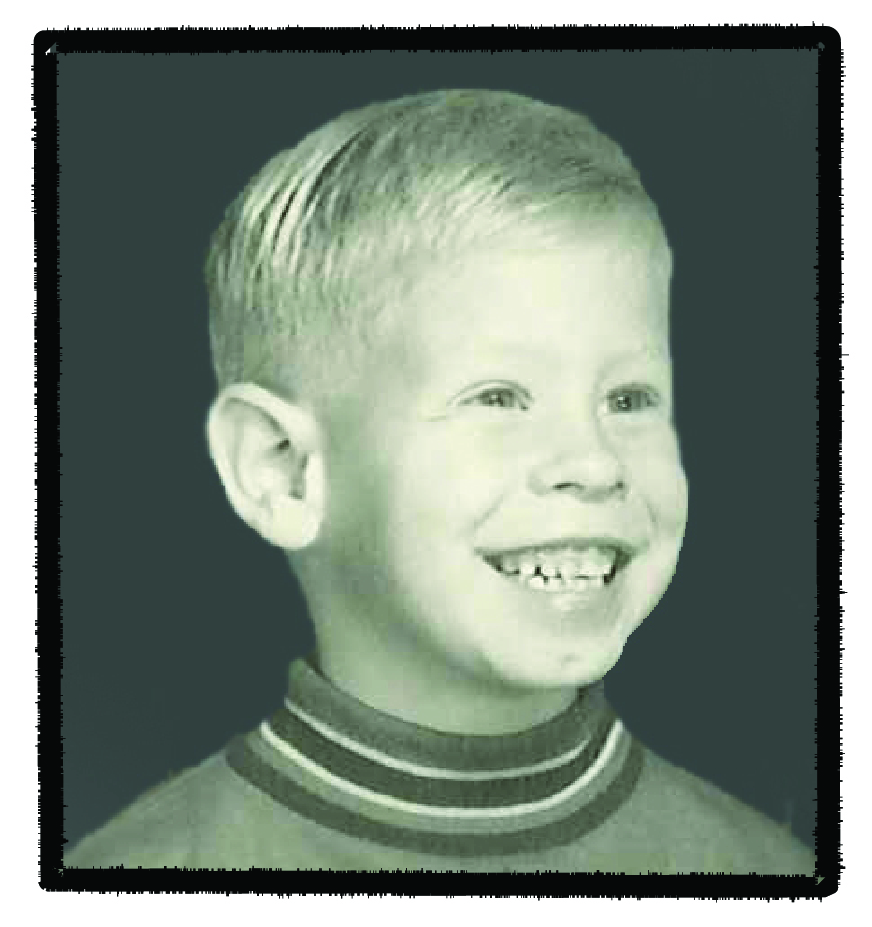
Kai aged 4, when he finished preschool. He was so proud.
My name is Guelda Redman, and I am the mother of three wonderful children. I want to share the journey that our family is taking with my lovely and amazing son, Kai Heimburger.
Kai has always had a sweet heart and soul. He was a shy, quiet, and gentle little boy. When he was playing with other kids, he did not have the self-confidence to join in a game until he was invited. Although everyone liked him, he was never very sure of himself.
Kai loved to create and illustrate stories. His kind, calm nature was reflected in his drawings. When he was in a fine arts school, he blossomed and found a group of close friends.
My son always did his own thing. He was never one to follow along with what everyone else seemed to be doing. This was very comforting to us and we thought that we never would have to worry about him.
We could not have anticipated what was to come.
In Grade 11, Kai’s personality changed. Almost overnight, he became defiant and, at the same time, even more solitary. Kai’s grades dropped and his happy outlook on the world disappeared. His artwork became very dark and disturbing.
Kai had begun using drugs. But he was not doing this to fit in with others or hang-out with friends. He was doing this all alone… to escape. We realize now that Kai was self-medicating.
Very soon, some of the things he said were not logical and didn’t always make sense. Although I even asked him a few times if he was hearing voices, he always said no.
Family trip. Kai (far left) just graduated. It was after a very hard few months – we had learned about his drug use and him not wanting to finish high school.
We knew Kai needed help, and found counselling for him. Kai was willing to talk to the counsellors about what he was going through, but he did not tell them everything he believed and felt. And they kept telling us that he was just being a “normal” teenage boy.
Kai is a huge animal lover. Once he rescued a black cat because they are the least likely to be adopted.
But, in my heart, I knew different.
I knew that this was not my son and something was terribly wrong. I was losing my gentle son.
Kai moved out after high school and worked at various jobs – mostly for short periods of time. And as time went on, Kai stopped cleaning his room, his apartment, and even himself. His hair became long and unruly. He didn’t care about what he looked like or how others saw him.
One morning, as my husband and I started work around the house, I went downstairs and was shocked to find Kai in our guest room. He was on the bed, fully dressed, and looking worse than I had ever seen him before.
Kai told me that he needed help. He said that no one at work wanted him around, and that he couldn’t go back to where he was living because no one wanted him there either. He had even thrown away his belongings because he believed that he had no choice but to be homeless.
And he believed that everyone could hear his thoughts.
As soon as Kai said that, things began to make sense. So many of the arguments I had with him in the past and many of the comments he had made fell into place. It was like finally finding the missing piece of a puzzle.
Kai finally admitted that he was hearing voices. They were telling him that everyone hated him, that he was a terrible person, that he was going to hell, and that nobody wanted him around. Kai told us that the voices were loud and tormenting him constantly, to the point where he no longer wanted to live. But Kai was too afraid to end his life because he believed that he would go to hell.
As I looked into his eyes, I saw that they were very dark and haunted. He was in so much pain and was so scared, and I had no idea where to go and how to help him.
The next few years were filled with hard, harsh lessons for us all.
We learned that when your child hurts himself and won’t go to the hospital, the only thing you can do is to call the police. One cold January night, the police drove up as Kai was walking out of the Fraser River – where he had only gone in up to his knees. When we met them at the hospital, they told us that he was very polite and didn’t argue with them about what needed to happen.
In the emergency room, waiting for a bed.
That was the first time he was certified. That was the first time we spent the night in a hospital, waiting until a bed in the psych ward was available.
We eventually learned that if we wanted him to get real help, we could not bring him home with us, although we desperately wanted to. There are no words to express the pain you feel when you have to say to your child “No. We won’t take you home.”
Over time and after lots of testing and therapies, Kai slowly got better. And as he was transferred from one facility to another, there was nowhere too far for us to go. We accumulated thousands of kilometres on our car as we often drove for hours to see him daily if he was close, or once or twice a week if he was further away. We needed to prove to him that we still loved him.
But walking out of those facilities without our son… day after day, week after week…was one of the hardest things we have ever done.
We soon learned that we could tell how Kai was feeling. Whenever Kai felt uncomfortable, he would put up his hood.
We learned that there is no “one size fits all” treatment – it takes a long time to find the right combination of medications for each person.
But with treatment and support, we learned that you can have schizophrenia and still have a good life. You can work, enjoy your family, and have friends.
There are far too many families that find themselves where we were, knowing something is very wrong and desperately looking for answers. We learned that BC Schizophrenia Society (BCSS) offers courses, runs support groups, and has many resources especially designed to help families like ours… free of charge. Whenever we have problems, questions, or want to know about the latest treatments, BCSS is there.
Despite the research that is happening, we need to do a lot more to understand, treat, and finally cure this disease.
In 2013, when BCSS joined the BMO Vancouver Marathon, I saw a way to make a difference for other families by fundraising so BCSS can do what it does so well. And so, “Team Heimburger” was formed.
Team Heimburger is a fundraising team for BCSS, as well as a Facebook group where I share posts from the BCSS page about mental illness, research and hope. My followers are family, friends, and people who have either supported our family or are looking for information and help.
Team Heimburger, which is a combination of our amazing family and friends, has been running, walking, and fundraising for BCSS for the last 7 years. It is our honour and blessing to be able to give back.
Team Heimburger and a few of our supporters. We have had many friends and family join us over the years. (Kai is on the right, holding his niece.)
In addition to Team Heimburger’s participation in this year’s “virtual” event, one of Kai’s uncles, Steve, decided to do even more. Steve decided to trek 650 kilometres from Castlegar to Hope, British Columbia. Steve’s “Walk To/For Hope” raised awareness and funds for BCSS. It was not easy. Although there were many times his body told him to quit, Steve kept going, knowing that people like Kai, and that families like ours, were counting on him.
During the day, Steve hiked along the Columbia & Western and Kettle Valley Rail Trails. And in the evenings, Steve talked with fellow travellers about what he was doing. He asked people what they knew about schizophrenia and told them about how it has affected our lives. Through it all, he raised more than $5,000 for BCSS.
This journey was not just physically-trying for Steve, but was also deeply emotional. Steve’s emotions washed over him when he finally arrived in Hope and saw Kai – standing behind all the other supporters, patiently waiting his turn to greet his uncle – a touching reminder of why his walk was so important.
You too can make a difference for so many who are searching for help, feeling desperate and lost.
You can help those who are clinging to hope that one day they will be able to see the person they love come out from behind those haunted eyes; to see a smile, or hear a laugh.
You can help those whose minds have turned against them, telling them lies, devastating their lives, and destroying their dreams.
Kai holding his nephew for the first time when he came home from the NICU.
With your help, there is hope.
Today, Kai is working full-time and lives in a group home facility where he shares an apartment and receives 24/7 support. He is still quiet, and looks like a mountain man with his long hair and bushy beard. But now Kai smiles and laughs. He loves his niece and nephew and they love him.
Thank you so much for reading our story and for your support.
During this time of uncertainty, the staff at BC Schizophrenia Society (BCSS) is working hard to adapt programs and services so families can still get the help they need. It has been a significant challenge. That is why I am excited to share some great news. Two of our supporters, a loving mom and dad, have pledged to help BCSS do something new… something to build hope for families:
A Monthly Donor Matching Gift Challenge
Many people find monthly giving easier and more affordable because they can divide their annual gift into 12 equal donations.
On top of matching monthly donations, this mom and dad have also agreed to match all one-time donations to build hope for other families.
Become a monthly donor of $10 or more between now and Father’s Day, and your first year of donations will be doubled!
These parents are forever grateful for the help and compassion they received from our Regional Educators. Through our support groups and Strengthening Families Together course (SFT), they were able to gain insight into schizophrenia and coping strategies that they could not find anywhere else.
When they heard about the story of Simon and his mother, Judith, they could easily imagine themselves, like Judith, trying everything possible to help their son. And that was when they knew they had to do something to build hope:
"Simon lives with schizophrenia. And now all of his worst nightmares are coming true; the world is being destroyed by “The Invisible Enemy” he has known about for years. Simon is so scared of COVID-19 that he has barricaded himself in his small apartment, stuffing towels under his door. He will not come out, not even for his mom whom he loves and trusts. Judith speaks with him over the phone and through the door, trying to comfort him, encouraging him to open the door so he can enjoy the food she brought. Judith leaves a “care package” at his door, crying as she walks down the hall with last night’s dinner in hand…. another meal that Simon was too afraid to touch."
Far too many family members, like Judith, are calling BCSS, desperately looking for new ways to cope. They are counting on BCSS for help solving urgent and immediate problems caused by the pandemic. But they will also need new resources as they and their loved ones tackle many significant changes in the months and years to come.
With your support, families will continue to have “a reason to hope… the means to cope.” Your donation will build hope as it funds the highest priority needs, including supporting family members like Simon’s mother who are turning to BCSS each and every day.
Every donation makes a difference. And with this unprecedented matching gift challenge from our grateful couple, your donation doubles.
My family and I have been touched by schizophrenia through my dear brother, Dave. You can read our story at http://www.bcssfoundation.org/the-story-of-Dave-Sandy. Our heartbreaking journey inspired me to get involved in the BC Schizophrenia Society Foundation. And that is where I met Catherine.
Catherine describes her journey as one of learning, changing and accepting her “special” son, Paul. She talks about going through disbelief, denial, despair, blame, guilt, anger, and finally… acceptance. At the same time, Catherine’s story is filled with faith, hope and love. [Read Catherine's story.]
After nearly 20 years of desperately trying to figure out what was wrong with Paul and how to keep him alive and safe with schizophrenia, Catherine finally found “a reason to hope…the means to cope” through the British Columbia Schizophrenia Society (BCSS).
BCSS offers vital education and resources – free of charge – to anyone affected by severe mental illness like schizophrenia so that they are better able to advocate and care for their loved ones. And this support is only available because of the generosity of donors like you.
Families, like Catherine’s, need education and support now. There are still far too many families in crisis who are waiting for support groups and programs, like our Strengthening Families Together (SFT). Children and youth who are struggling because a loved one has mental illness are waiting to take our Kids or Teens in Control Program.
At the same time, we also need researchers to continue searching for earlier diagnostic tools and better treatments so that “special” family members, like Paul and Dave, do not suffer. Catherine attributes Paul’s ongoing success to a major breakthrough in treatment – long-acting injectable medication. I wish that treatment had been available for Dave.
Every gift matters.By giving to BCSS, you are helping families today and funding research that will build healthier, better tomorrows. Together, we can save lives.
Please consider making your gift today and I will personally match all donations, up to a total of $10,000. This means you can double your gift… $50 becomes $100; $100 becomes $200. And to inspire you even more, I am extending my matching gift commitment to January 31, 2020.
Some of you may have “special” sons, daughters, or other family or friends who live with a major mental illness like schizophrenia which takes them away from you and into the frightening world of psychosis.
My name is Catherine Larnon-Trout and I want to tell you about my “special” son. If it were not for BC Schizophrenia Society (BCSS), I do not know where I would be today. And I am not sure if my son would still be with me.
Years ago, when I timidly walked through the door of a local Schizophrenia Society office, I was clean out of faith and hope. My eldest son, Paul, was disrupting our whole family and terrifying my other two children. Nothing I did was working and I was very scared because no one had any answers.
Catherine and Paul in Beaver Scouts
That day, as I was stuffing fact sheets and brochures into my bag, a lovely lady asked me if I needed any help. I told her “No... I’m just looking.” But she knew! She brought me a cup of tea and sat me down. She invited me to tell her about my son and three hours later, I left with some faith in humanity and a smidgeon of hope.
(Catherine reveals what she found when she walked through those doors.)
I told her about my beautiful, kind, funny, blonde, blue-eyed, perfect little boy… so full of life and promise. Paul was a bright, well-behaved, organized, and helpful kid. He was a gifted athlete, a smart student, and a caring member of our church and community.
Then one day, when Paul was in Grade 11, there was a phone call from his school. Paul had just punched another student, one who was simply walking towards him in the school hallway. Paul broke the boy’s nose.
I never thought I would be the mom who said “not my kid” when there was trouble. But that was what I immediately said. It was impossible. I couldn’t believe it.
But it was true. Of course, the boy’s parents were very upset and wanted to charge Paul. But because Paul had never been in any trouble and was a model student, he avoided jail and did community service.
That was the moment… the first sign.
What I did not know then, was that Paul did not even see the other student. He saw a monster in front of him and did what he needed to do to protect himself.
Paul aged 17
Over the next few years, Paul continued to see and hear many more monsters, gods, devils, and other hallucinations. He tried to go to college; he tried to work. But Paul could not succeed because he was becoming increasingly paranoid.
I tried everything. I encouraged him to exercise, I fed him special food and vitamins, I yelled, I cried, and so much more… but nothing worked. Paul saw counsellors, psychiatrists, child and youth workers… but no one knew anything. No one gave us a diagnosis.
My fears grew because I never knew when Paul would go into psychosis. My younger kids became so afraid of Paul that I had to ask him to leave our home. To this day, that is one of the hardest things I have ever had to do – choose two of my children over my other child.
Paul continued to sink deeper into psychosis. He threw himself out of cars and even once off of a roof. My beautiful, blonde, blue-eyed boy was gone and I was left with a broken, smashed, and very sick son.
But the worst was yet to come. Paul paid a huge price for committing a minor crime, ending up with a jail sentence of two years less a day.
I was devastated. There is not enough strength in any mother’s reserve to stop her from being crushed as she watches her mentally ill child being taken to jail. I cannot even describe that pain.
My son was locked up, mostly in isolation, for two years. And because he did not have a diagnosis, he received no medication.
Paul came out of jail as a completely different person. It would be another two years before he was finally diagnosed with schizophrenia and received medication. For the next decade, while Paul lived in horrible, unsafe places, I kept trying to find ways to get him food, clothing, and other basic needs. But no matter what I did, my dear son was slowly withering away before my eyes.
When I was nearly at the end of my rope, desperate and in despair – not knowing what more I could do to save Paul – I saw an ad for a free, two-day course offered by BCSS.
That BCSS course saved my life.
That course and other BCSS education and resources taught me how to navigate and rebuild my own life. I was then better able to help and support Paul and my other children. And I learned how to share that essential information with other families.
Now... more than 10 years later…
“When life gives you lemons, wear them!”
Paul is in his late forties. He lives in his own apartment and has a part-time job. Paul understands what he needs to do to stay on an even keel. He loves designing clothes – Paul is an expert at making hats out of anything. He watches sports and knows every move made by every team in any sport.
He visits us regularly and particularly likes holidays and big family events. Paul enjoys his nieces and nephews and they love their Uncle Paul. When Paul laughs and jokes, I see my funny little boy and it makes me happy.
Sometimes I cry when I look at him because I am sad at his destroyed life, while other times I cry because I am happy and proud to have him with us, knowing he has gone to hell and back.
Now that I work at BCSS, I see firsthand how families, just like mine, are able to change their lives for the better with the support and education they find through our programs and services.
Recently, my 12-year-old granddaughter took part in one of our courses, Kids in Control. It helped her make sense of her uncle, and anyone else that has a severe mental illness, in a way that did not leave her feeling afraid, that it's her fault, or that she needs to fix it.
(Catherine tells us more about Kids in Control and how it helped her granddaughter.)
I hope you understand how much education is needed and that it can change the outcome of a family immensely as it did mine. And the programs and services that offer this life-saving information simply cannot exist without the support of generous donors, like you. But there are still far too many families who are in crisis, desperate for our help.
Catherine's Boys, Paul's brother and Paul
And then there is research. Research helped bring a miracle into our lives. A key to Paul’s continued wellbeing is long-acting injectable medication and his willingness to go every two weeks for his injection of antipsychotic medication. We no longer fight about pills! I am so very grateful for this, as is Paul. He remembers the wild mood swings, the hospitalisations, the restraints, and the long recoveries. And now all that trauma is gone because of a treatment that came from research.
Your generosity can make all the difference for a family like ours. Please consider giving what you can, knowing that your donation truly changes and even saves lives.
My family and I have been touched by schizophrenia through my dear brother, Dave. [You can read our story here.] Our heartbreaking journey inspired me to get involved in the B.C. Schizophrenia Society Foundation. Like Claudia, the mother who shared her story of her beloved son, Kent, I had to do something to fight the destruction of schizophrenia on the ones we love. [Read Claudia and Kent's Story.]
Like many of us, Claudia tried to find information about anti-psychotic medications and follow-up care so she could help her son get the best treatment possible and help him stay on his medications. British Columbia Schizophrenia Society (BCSS) provides vital education and resources to anyone affected by schizophrenia free of charge, so that they are better able to advocate and care for their loved ones.
Families need education and support now. Yet at the same time, we need researchers to find tools for earlier diagnosis and better treatments.
Every gift matters. By giving to BCSS, you are helping families today and funding research that will build a healthier, better future for all.
Together, we can save lives. I will personally match all donations, up to a total of $10,000. This means you can double your gift… $50 becomes $100; $100 becomes $200. And to inspire you even more, I am extending my matching gift commitment to January 31.
My name is Claudia Schalm. I live in Williams Lake, and want to share the story about my son, Kent. Kent was the oldest of my four children. We lived on a farm when the children were young and Kent was his father’s right-hand man. Kent was a responsible, hard worker. He could do anything from milking cows to running machinery, and everything in-between. You name it and Kent could do it.
Kent in Grade 1
Kent was a tough, resilient and athletic guy. On the ski hill, he amazed us, racing straight down the hill at high speeds - never wiping out - always with a big grin, jacket wide open and his favourite Russian hat with the ear covers, flapping straight back in the wind.
Kent spent several summers planting trees, and was always the top tree planter. He made enough money to travel throughout Australia for six months.
Kent dreamed of becoming a police officer and when he was 21, Kent went off to Douglas College to study Criminology. But by the end of his second year, Kent was experiencing such significant symptoms of serious mental illness that he was no longer able to cope on his own. Kent returned home to Williams Lake to live with me and his sister, Cindy.
We were concerned and confused by Kent’s increasingly erratic and bizarre behaviour. The most disturbing was when he would laugh and chat with people that only he could see and hear. Despite our pleas, Kent refused to see a doctor and declined rapidly, becoming more and more withdrawn and silent.
Eventually, Kent was diagnosed with schizophrenia. But Kent never accepted his diagnosis, even up to the day he died. “There is nothing wrong with me,” he would announce, “I don’t need medication.”
We didn’t know it then, but this lack of awareness is actually a symptom called anosognosia.
Anosognosia, which may affect up to 50% of those with schizophrenia, means “lack of insight.” It is thought to be caused by a brain defect in the frontal lobe. Anosognosia is the genuine inability to recognize that the problem exists. Kent wasn’t just being difficult or refusing to face the truth, he truly believed that he didn’t have an illness. He could not see any reason why he would need to take medication.
BCSS Educators could have helped us understand and cope with this symptom.
Kent in junior high
For the rest of his life, there would be times when Kent would stop taking his medications. And then, when things got bad (and after much begging and pleading), he would reluctantly start them again.
Over the years, Kent had many jobs, but they always ended in dismissal because he simply could not stay on his meds. When Kent was not working, he would “make the rounds” as he called it. His hang-outs included McDonalds, A&W, Tim Hortons, Gustafson Chrysler, Heartland Toyota and The Jamboree. Kent would greet everyone with a huge smile and visit, while bumming coffee and cigarettes. The staff at these businesses were kind and friendly to Kent, helping him feel like he had a place to go, somewhere where he was wanted and appreciated. And I can never thank them enough.
Kent loved people and had some really good friends. He was a kind and gentle soul with a big heart. Even though Kent accepted people as they were and judged no one, some people did not understand Kent, especially when he was not taking his medications.
Kent shared many years with Teena. And through Teena’s First Nations heritage and connections, Kent was embraced by a large community of friends and family. Their acceptance of him was complete and unconditional. Teena loved and cared for Kent, and we are deeply thankful that Kent and Teena found one another.
My family and I (From left to right: Troy, Cindy, Wade, myself and Kent)
In December 2016, after 25 years of taking an older antipsychotic medication on and off, Kent was suddenly was unable to speak and had difficulty swallowing. This condition was directly related to the prolonged use of this mediation.
By January 2017, Kent was put on a newer atypical antipsychotic medication. But he received only two doses before developing blood clots. He went through three operations to remove the clots, but they just kept reappearing.
My loving, kind, and gentle son, Kent, died on Mach 4, 2017.
I know medication helped Kent, I am certainly not advising anyone to stop taking antipsychotic mediation. But we as families desperately need ongoing education about the disease and medications so we can support the health and well-being of our loved ones.
And this is where BCSS could have made such a tremendous difference in our lives. BCSS could have helped us understand Kent’s anosognosia. With the help of a BCSS Educator, we might have been able to find other ways… maybe better ways…to help Kent stay on his medication. Through BCSS, I could have learned about other medications and advocated for ongoing assessments, second opinions and other options.
If only we had discovered B.C. Schizophrenia Society sooner.
Finally, in our time of grief, we found BCSS and BCSS is supporting us and connecting us with other families who have experienced similar losses.
Parents should never have to bury their children.
I feel the keen pain of Kent’s absence each and every day. And I cannot continue to sit by while schizophrenia devastates families, leaving far too many of us feeling helpless and in despair.
A family lineup during one of our annual family trips to the lake. Kent is fourth from the left.
But there is something each of us can all do. Chris Sandy, who shared his story about his little brother Dave, has once again generously offered to match all donations to this campaign – dollar for dollar – up to a total of $10,000, until January 31, 2019.
Double your gift today!
Imagine your gift… and its impact… being doubled. Your donation of $50 will become $100; your donation of $100 will become $200!
Your generosity will help give more families the information and support they need when they need it. Your donations will also fund essential research, right here in B.C., with the hope that our grandchildren and great-grandchildren may not have to struggle with schizophrenia as we have.
P.S. Thanks to the generosity of Chris Sandy, donations received by December 31, 2018 will receive a 2018 tax receipt. Every gift counts. Please make your gift today and double your impact!
[Read the story of Chris Sandy's brother, Dave.]

 [
[


